 Skip to content

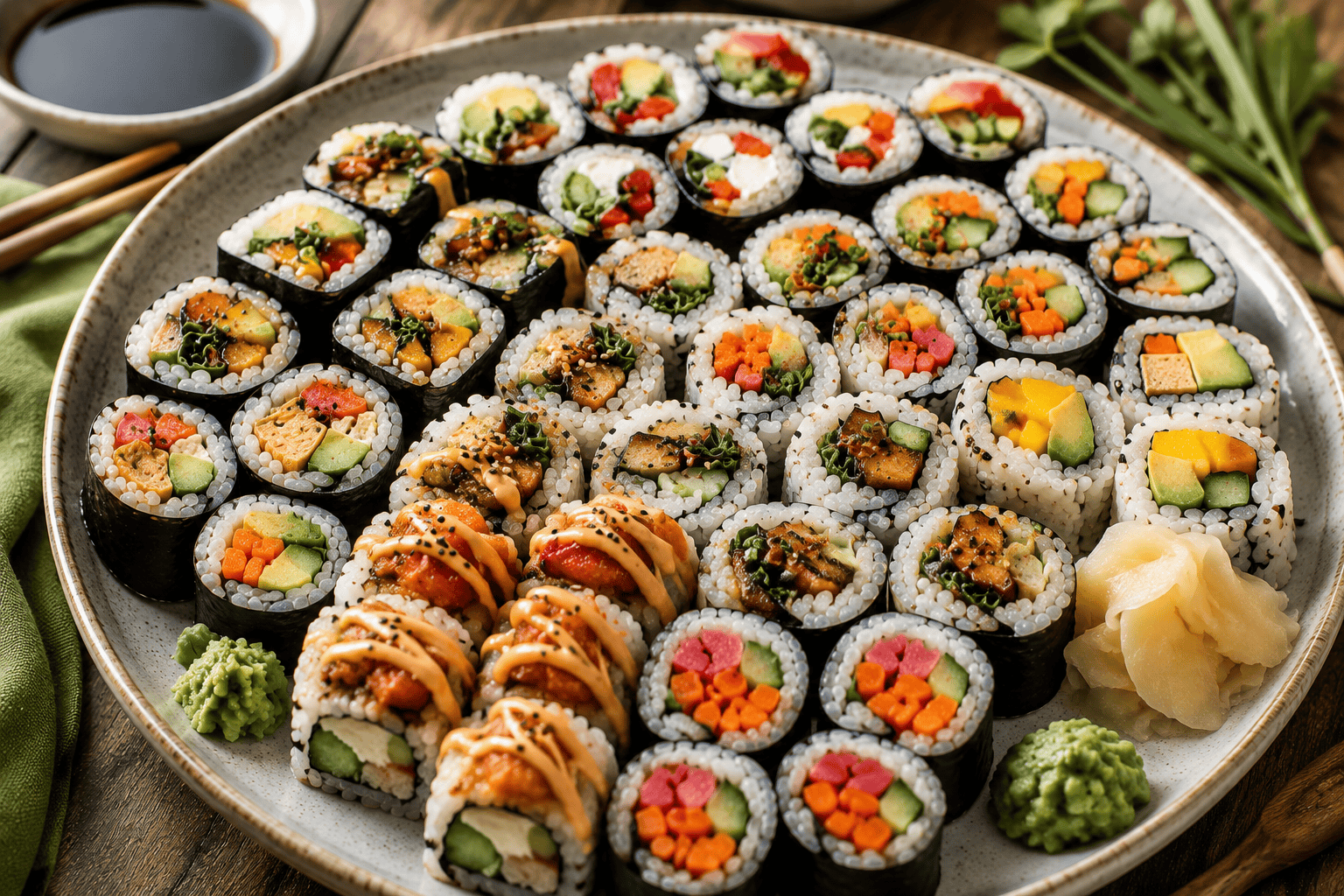
10 Delicious Vegetarian Sushi Rolls You Can Make at Home
Making sushi at home can look like one of those kitchen projects best left to people who know precisely what they’re doing. There is the rolling, the suspiciously sticky rice and the very real possibility that your beautifully planned maki will fall apart the moment you introduce it to a knife.
But homemade sushi is much easier than it looks — particularly when you’re making vegetarian sushi.
There’s no raw fish to worry about, the fillings are inexpensive and you can experiment with whatever happens to be lurking in the fridge. Once you’ve mastered the rice and basic rolling technique, you can turn everything from roasted sweet potato and crispy tofu to avocado, mushrooms and even omelette into genuinely delicious sushi.
These vegetarian sushi recipes range from traditional combinations to slightly less conventional rolls, with plenty of vegan options included too.
What Do You Need to Make Vegetarian Sushi at Home?
You don’t need an enormous collection of specialist equipment, although a bamboo sushi mat makes rolling considerably easier.
For most of these recipes, it’s useful to have:
- Sushi rice
- Nori sheets
- Rice vinegar
- Caster sugar
- Salt
- Soy sauce
- Sesame seeds
- A bamboo sushi rolling mat
- A very sharp knife
- A small bowl of water for your hands
Then you can start playing around with fillings.
Avocado and cucumber are obvious choices, but vegetables with contrasting textures tend to produce the most interesting rolls. Think crispy sweet potato with creamy avocado, sticky mushrooms with crunchy spring onions or tempura asparagus with spicy mayonnaise.
How to Make Sushi Rice
Good sushi starts with the rice.
For approximately four sushi rolls, rinse 250g sushi rice under cold water until the water runs almost clear. Put it into a saucepan with around 330ml cold water, cover and bring to the boil.
Reduce the heat to its lowest setting and cook, covered, for around 10 minutes. Remove from the heat and leave it alone for another 10 minutes without lifting the lid.
Meanwhile, gently warm 3 tablespoons rice vinegar, 1 tablespoon caster sugar and ½ teaspoon salt until the sugar dissolves.
Transfer the cooked rice to a wide bowl and gently fold through the vinegar mixture. Don’t aggressively stir it or you’ll turn the rice into mush.
Allow it to cool to room temperature before making your sushi.
How to Roll Homemade Sushi
Place your bamboo mat on the worktop and put a sheet of nori on top, shiny side facing down.
With slightly damp hands, spread a thin layer of sushi rice over the nori, leaving approximately 2cm uncovered along the edge furthest away from you.
Arrange your filling in a horizontal line across the lower third of the rice. Don’t get carried away here. Overfilling is probably the quickest route to a sushi-related breakdown.
Lift the edge of the bamboo mat closest to you and roll it firmly over the filling. Continue rolling away from yourself, applying gentle pressure as you go.
Moisten the exposed strip of nori with a little water and finish the roll.
Let it sit seam-side down for a minute before cutting it into six or eight pieces with a damp, very sharp knife.
Now you’ve got the technique, it’s time for the good bit.
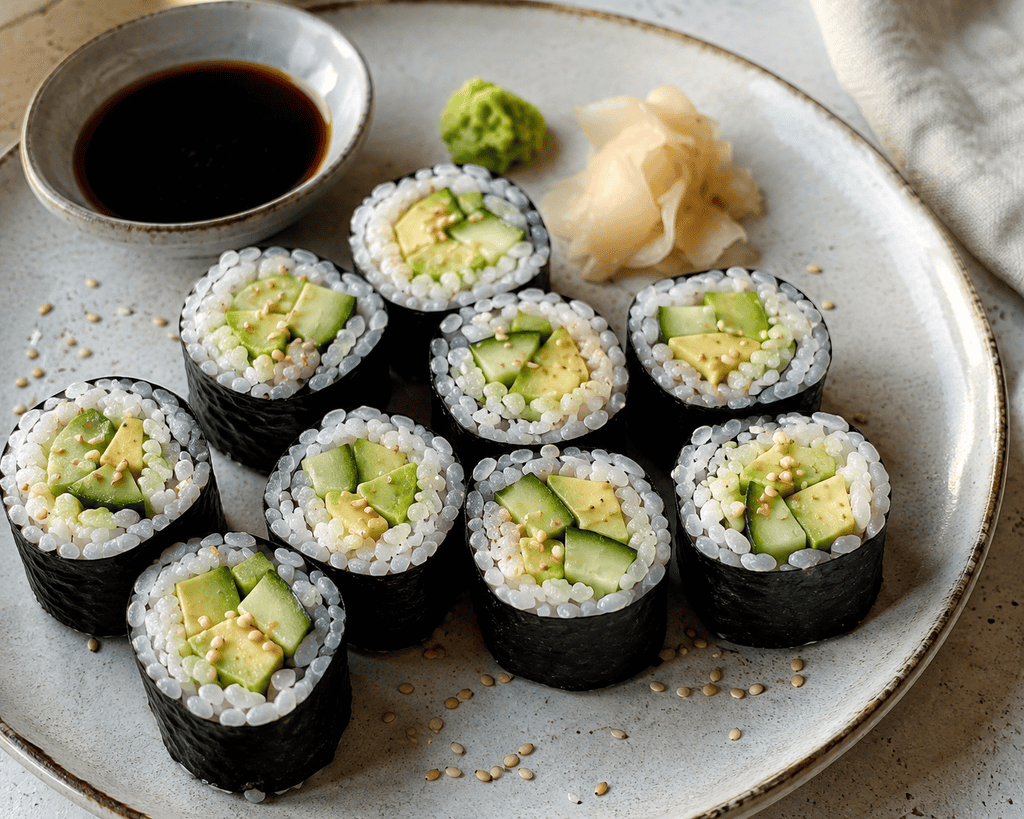
1. Avocado, Cucumber & Sesame Maki
Vegetarian | Vegan
Start with the classic.
Avocado provides the creamy richness you’d normally get from fish, while cucumber gives the roll some much-needed crunch. Toasted sesame seeds add a slightly nutty finish.
You’ll need
- 1 nori sheet
- Approximately 120g prepared sushi rice
- ¼ ripe avocado, sliced
- ¼ cucumber, cut into thin batons
- 1 tsp toasted sesame seeds
- Soy sauce, to serve
Method
Spread the rice over your nori and sprinkle with sesame seeds.
Arrange the avocado and cucumber across the lower third, roll tightly and slice.
Serve with soy sauce, pickled ginger and wasabi if you like.
It’s incredibly simple, but there’s a reason avocado and cucumber sushi appears on virtually every vegetarian sushi menu.
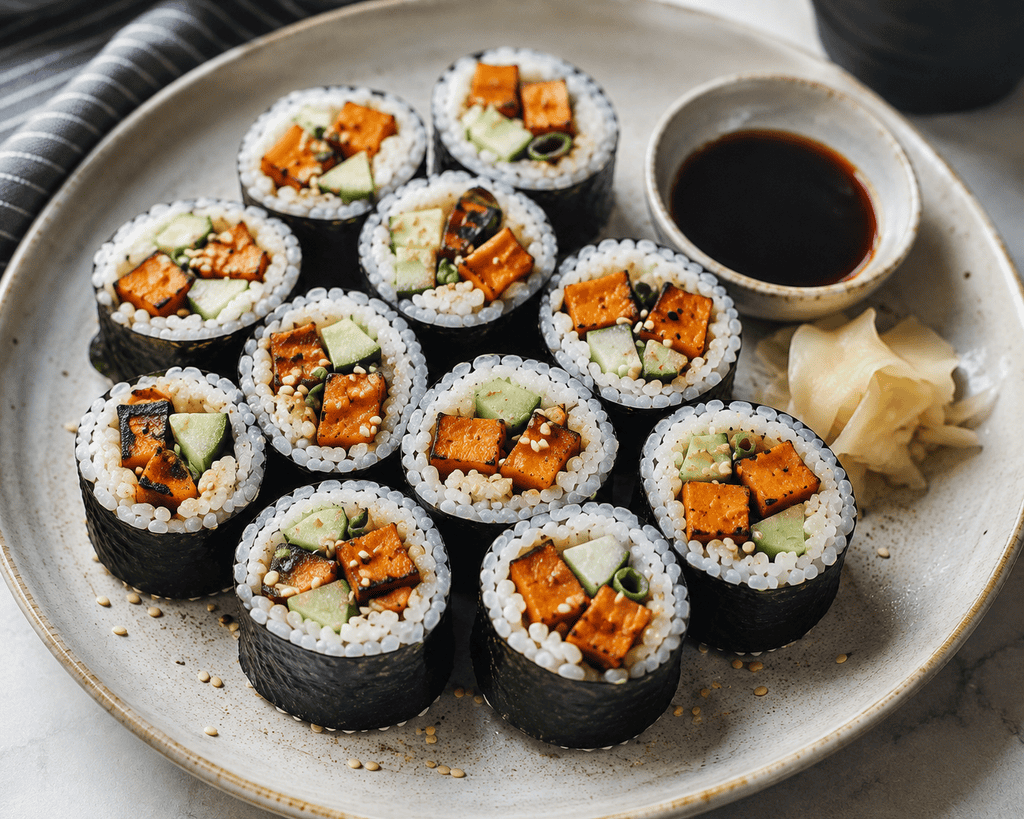
2. Crispy Sweet Potato Sushi Rolls
Vegetarian | Vegan with vegan mayonnaise
These are particularly good if you’re trying to convince somebody that vegetarian sushi doesn’t have to feel like the disappointing option.
You’ll need
- 1 nori sheet
- 120g prepared sushi rice
- ½ small sweet potato
- ¼ avocado, sliced
- 1 tbsp mayonnaise or vegan mayonnaise
- ½ tsp sriracha
- Sesame seeds
- A little vegetable oil
Method
Cut the sweet potato into thin batons, toss lightly in oil and roast at 200°C/180°C fan for around 20–25 minutes until tender inside and beginning to crisp at the edges.
Mix the mayonnaise and sriracha.
Once the sweet potato has cooled slightly, arrange it over the rice with avocado and a small drizzle of spicy mayonnaise.
Roll, slice and finish with sesame seeds.
The combination of warm, slightly caramelised sweet potato and cool avocado is excellent.
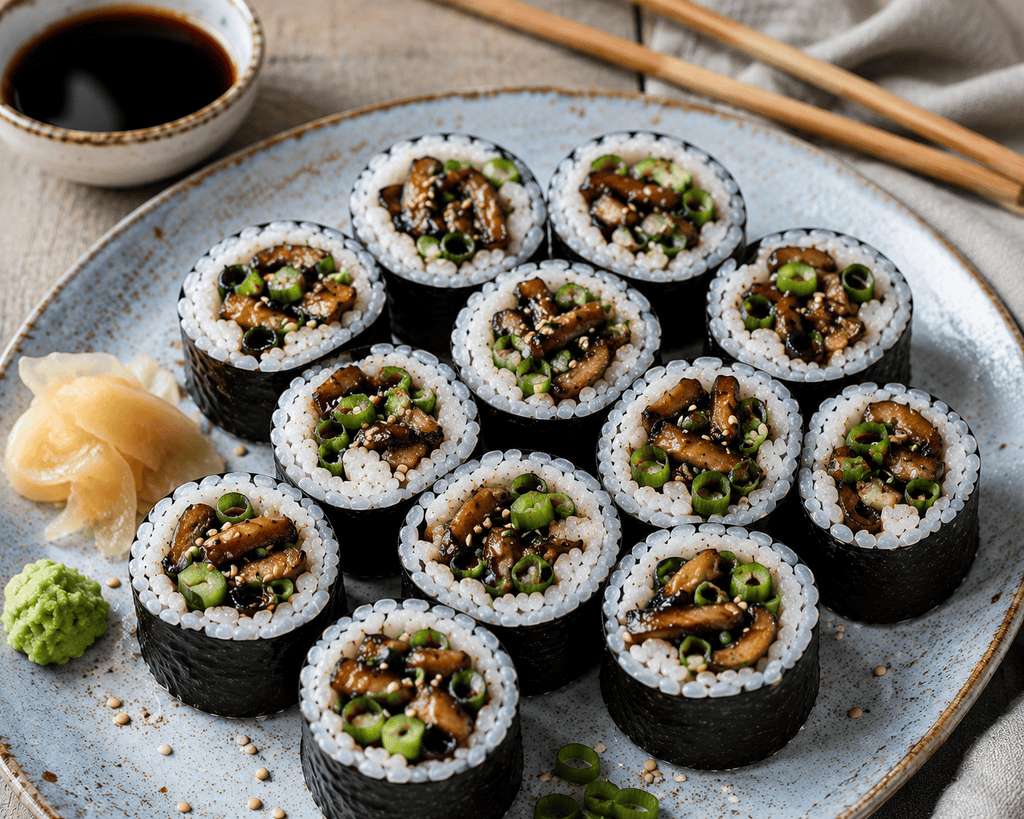
3. Teriyaki Mushroom & Spring Onion Rolls
Vegetarian | Vegan
Mushrooms are one of the best vegetarian sushi fillings because they bring plenty of savoury, umami flavour.
Shiitake mushrooms are particularly good here, although chestnut mushrooms work perfectly well.
You’ll need
- 1 nori sheet
- 120g prepared sushi rice
- 100g mushrooms, finely sliced
- 1 spring onion, finely sliced
- 1 tbsp soy sauce
- 1 tsp brown sugar or maple syrup
- ½ tsp grated fresh ginger
- ½ tsp sesame oil
Method
Heat the sesame oil in a frying pan and cook the mushrooms over a fairly high heat until golden.
Add the soy sauce, sugar and ginger and cook for another minute or two until the mushrooms are glossy and sticky.
Allow them to cool before arranging across the sushi rice with the spring onion.
Roll and slice as normal.
A little chilli oil on the side works brilliantly with these.
4. Mango, Avocado & Cucumber Sushi
Vegetarian | Vegan
Fruit in sushi sounds questionable until you try it.
Ripe mango works surprisingly well with avocado and cucumber, producing a fresh roll that’s sweet, creamy and crunchy all at once.
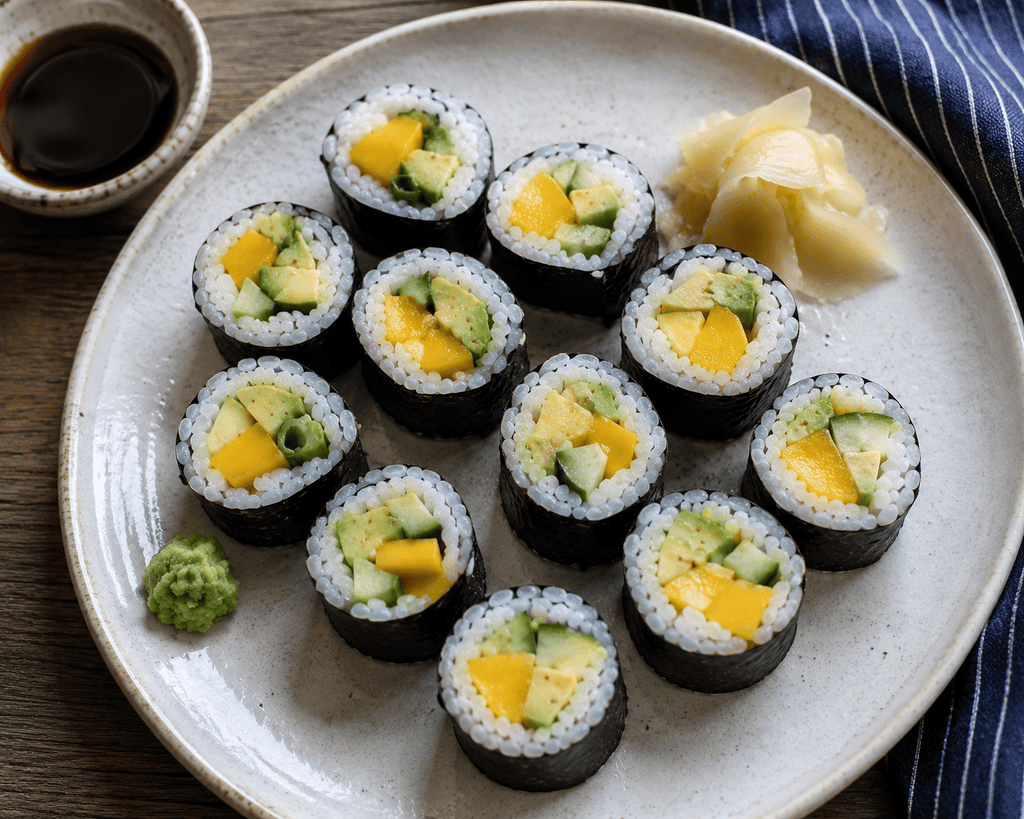
You’ll need
- 1 nori sheet
- 120g prepared sushi rice
- ¼ mango, sliced into thin strips
- ¼ avocado, sliced
- ¼ cucumber, cut into batons
- Sesame seeds
- A squeeze of lime
Method
Give the mango a very light squeeze of lime.
Arrange the mango, avocado and cucumber over your rice and sprinkle with sesame seeds before rolling.
Serve with soy sauce or a little chilli mayo.
The important thing is choosing mango that’s ripe but still firm. Very soft mango will make the roll difficult to cut neatly.
5. Crispy Tofu & Sriracha Mayo Sushi
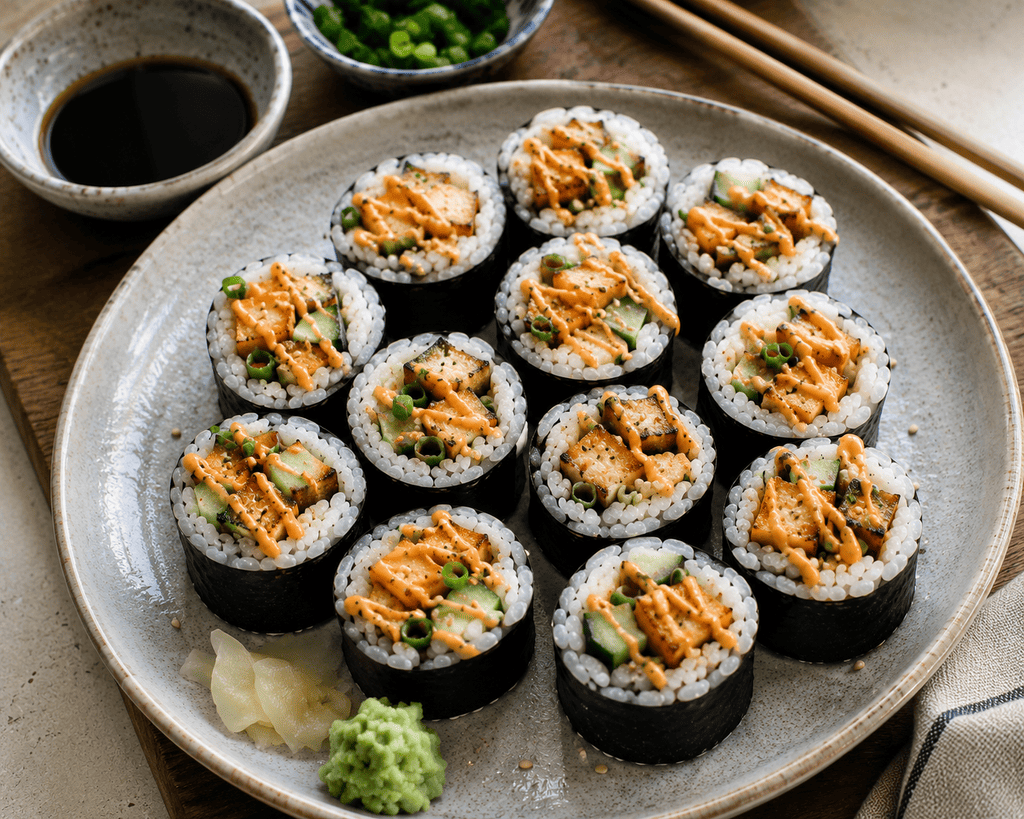
Vegetarian | Easily made vegan
If you want homemade vegetarian sushi that feels more substantial, tofu is your friend.
The trick is getting it properly crispy before it goes anywhere near the rice.
You’ll need
- 1 nori sheet
- 120g prepared sushi rice
- 100g firm tofu
- ¼ cucumber, cut into batons
- 1 tbsp cornflour
- 1 tbsp soy sauce
- 1 tbsp mayonnaise or vegan mayonnaise
- ½–1 tsp sriracha
- Vegetable oil
Method
Press the tofu to remove as much moisture as possible, then cut it into narrow strips.
Toss with soy sauce followed by cornflour.
Fry in a thin layer of hot oil until crisp and golden on all sides, then drain on kitchen paper and allow to cool slightly.
Mix the mayonnaise with sriracha.
Arrange the tofu and cucumber over the rice, add a small amount of spicy mayonnaise and roll.
Serve with extra sriracha mayo for dipping.
Vegetarian
Think of this as a fish-free cousin of the creamy Philadelphia-style sushi roll.
You’ll need
- 1 nori sheet
- 120g prepared sushi rice
- ½ roasted red pepper, sliced
- 30g cream cheese
- ¼ cucumber, cut into batons
- Black sesame seeds
Method
Pat the roasted pepper dry before using it. Too much liquid will make the sushi soggy.
Spread a narrow line of cream cheese across the rice, then add the pepper and cucumber.
Roll tightly, slice and scatter with black sesame seeds.
You can use roasted peppers from a jar, which makes this one of the easiest rolls in the entire collection.
7. Carrot, Cucumber & Pickled Radish Maki
Vegetarian | Vegan
This is the roll for people who want maximum crunch.
Pickled radish adds acidity that cuts through the sweetness of the sushi rice and makes a simple vegetable roll much more interesting.
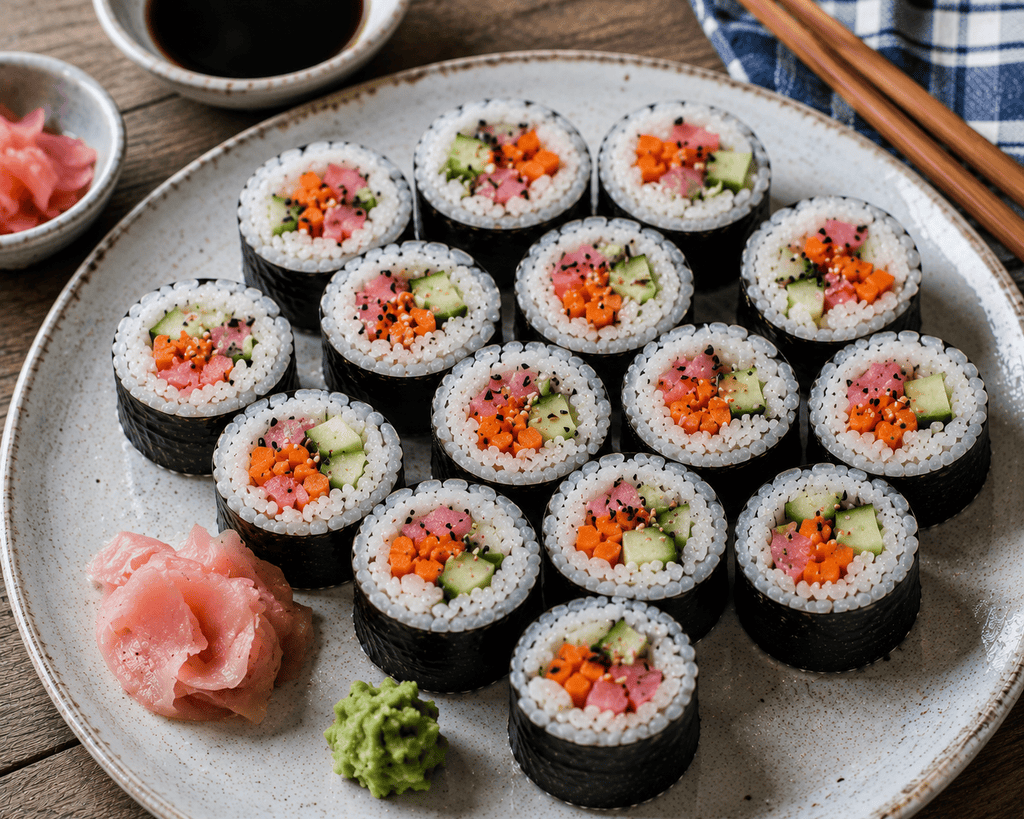
You’ll need
- 1 nori sheet
- 120g prepared sushi rice
- ¼ carrot, cut into fine matchsticks
- ¼ cucumber, cut into fine batons
- A few slices of pickled radish
- Sesame seeds
- Fresh coriander, optional
Method
Arrange the carrot, cucumber and pickled radish in a narrow line across the rice.
Add a few coriander leaves if you like them, sprinkle over the sesame seeds and roll.
Slice and serve with soy sauce.
If you’re using a particularly strong Japanese pickle, you won’t need much. A little acidity goes a long way.
8. Tempura Asparagus Sushi Rolls
Vegetarian | Can be made vegan
Crispy tempura asparagus gives you the sort of contrasting texture that makes restaurant sushi so satisfying.
You’ll need
- 1 nori sheet
- 120g prepared sushi rice
- 3–4 asparagus spears
- ¼ avocado
- 40g plain flour
- Approximately 60ml very cold sparkling water
- Vegetable oil, for frying
- Chilli mayonnaise, optional
Method
Trim the asparagus.
Mix the flour with enough ice-cold sparkling water to create a thin, slightly lumpy batter. Don’t overmix it.
Dip the asparagus into the batter and fry in hot oil for a couple of minutes until crisp. Drain thoroughly.
Allow it to cool slightly before placing it across your sushi rice with avocado.
Roll, slice and serve with chilli mayonnaise.
For vegan sushi, simply make sure your batter and chosen mayonnaise are vegan.
9. Japanese-Style Omelette & Avocado Sushi
Vegetarian
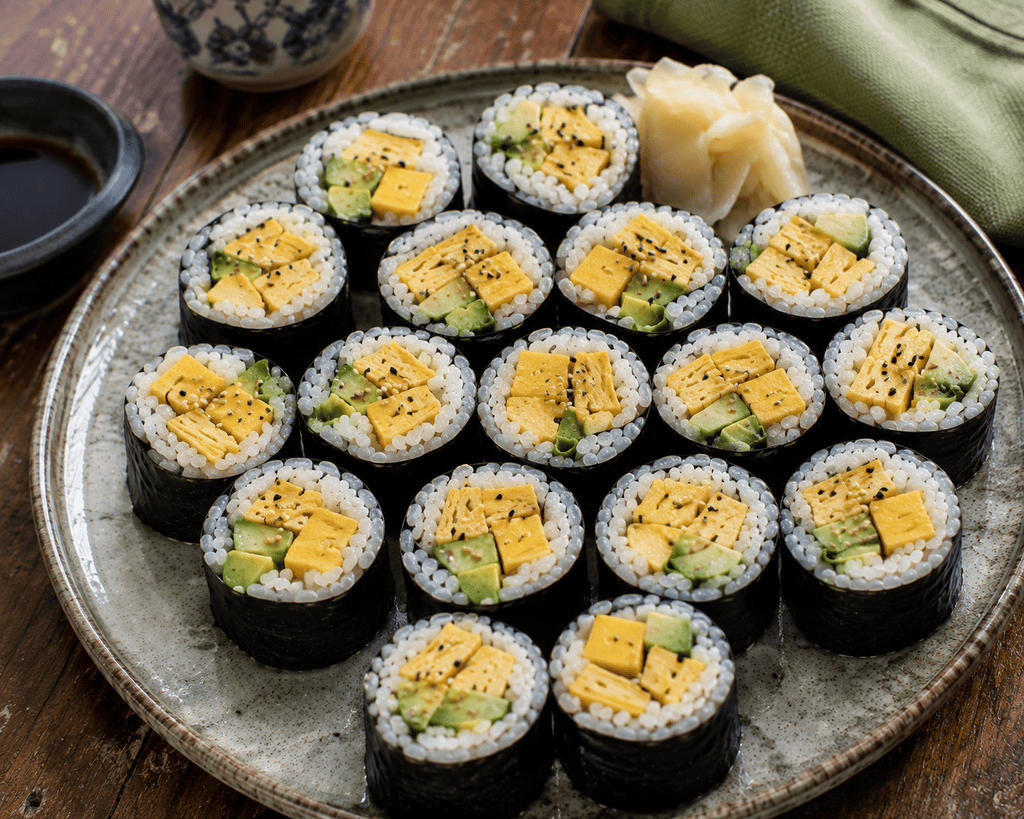
Egg might not be the first ingredient that springs to mind when you’re making sushi, but tamago — Japanese rolled omelette — is a sushi staple.
This is an intentionally simplified version for making at home.
You’ll need
- 1 nori sheet
- 120g prepared sushi rice
- 2 eggs
- 1 tsp sugar
- ½ tsp soy sauce
- ¼ avocado
- 1 spring onion
- A little vegetable oil
Method
Whisk the eggs with the sugar and soy sauce.
Heat a lightly oiled non-stick frying pan and cook the egg as a thin omelette. Fold it over itself while it’s still soft to create several layers.
Once cool, cut into long strips.
Arrange the omelette across the sushi rice with avocado and finely sliced spring onion.
Roll and slice.
The slightly sweet omelette against the seasoned rice is much better than it has any right to be.
10. Sticky Miso Aubergine Sushi Rolls
Vegetarian | Vegan
Save this one for last because it’s arguably the best.
Aubergine absorbs flavour beautifully, and cooking it until sticky with miso, soy and a little sweetness creates an intensely savoury filling.
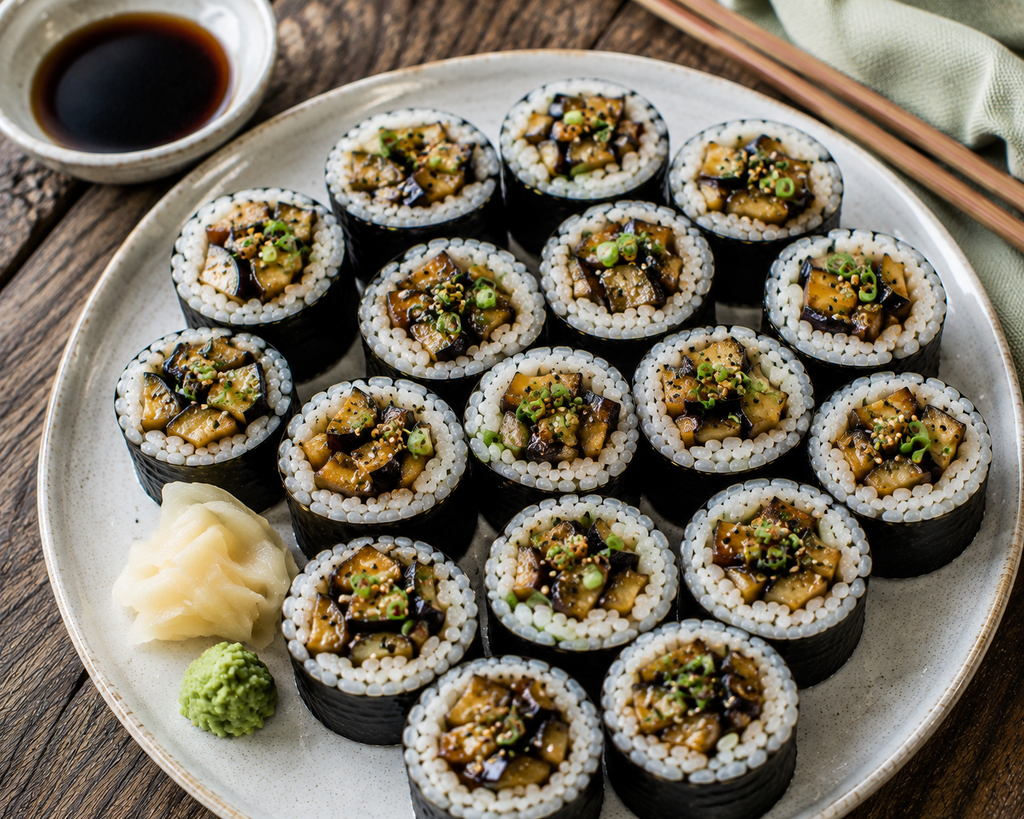
You’ll need
- 1 nori sheet
- 120g prepared sushi rice
- ¼ aubergine
- 1 tsp white miso
- 1 tsp soy sauce
- 1 tsp maple syrup or brown sugar
- ¼ cucumber
- ½ tsp sesame oil
- Sesame seeds
Method
Cut the aubergine into thin strips.
Heat the sesame oil in a frying pan and cook the aubergine until completely soft and beginning to caramelise.
Mix together the miso, soy sauce and maple syrup with a teaspoon of water. Add it to the pan and toss until the aubergine becomes dark, glossy and sticky.
Leave it to cool.
Arrange the aubergine and cucumber across the sushi rice, sprinkle with sesame seeds and roll.
The cucumber is important here because its freshness balances the rich miso aubergine.
The Best Sauces and Toppings for Vegetarian Sushi
Half the fun of homemade sushi is what’s served alongside it.
Soy sauce is the obvious starting point, while pickled ginger and wasabi give you the familiar sushi-bar experience.
For richer vegetable rolls, mix mayonnaise with sriracha for an easy spicy mayo. You could also combine soy sauce, sesame oil and a little rice vinegar for a quick dipping sauce.
Other good toppings include toasted sesame seeds, crispy onions, finely sliced spring onions and a small drizzle of chilli oil.
Just don’t drown your sushi in sauce. You’ve gone to all that trouble rolling the thing — you should probably be able to taste it.
Can You Make Sushi Without a Bamboo Mat?
Yes.
A sushi mat makes creating a tight, even roll easier, but you can use a clean tea towel covered with a piece of reusable food wrap or baking parchment instead.
Use it in exactly the same way as a bamboo mat, lifting the edge to guide and compress the roll as you go.
Your first attempt might not be worthy of a Japanese restaurant window display. That’s fine. It’ll still taste like sushi.
What Vegetables Are Good in Sushi?
The best vegetables for sushi tend to offer either texture or plenty of flavour.
Cucumber, carrot, asparagus and radish provide crunch, while avocado adds creaminess. Roasted aubergine, mushrooms, sweet potato and peppers bring richer flavours.
You can also experiment with shredded red cabbage, tenderstem broccoli, pickled vegetables, edamame, beetroot and finely sliced spring onions.
The important thing is avoiding excessively wet ingredients. Drain or pat vegetables dry before adding them to the roll so the nori doesn’t become soggy.
How Long Does Homemade Vegetarian Sushi Keep?
Homemade sushi is at its best when eaten soon after you’ve made it.
If necessary, vegetarian sushi can be stored in an airtight container in the fridge and eaten within 24 hours, provided all of the ingredients you’ve used are suitable for refrigeration.
The downside is that refrigerated sushi rice gradually becomes firmer and drier, while avocado can discolour and crispy fillings lose their crunch.
If you’re entertaining, prepare the fillings and sushi rice ahead where practical, then assemble the rolls closer to the time you want to serve them.
Is Vegetarian Sushi Healthy?
It certainly can be.
Vegetarian sushi can provide vegetables, carbohydrates and, depending on your fillings, protein and healthy fats. Tofu, egg, avocado and sesame seeds can make rolls more substantial, while vegetable-heavy maki can be relatively light.
But “vegetarian” doesn’t automatically mean nutritionally superior. Tempura, mayonnaise, cream cheese and salty sauces can substantially change the nutritional profile.
As with most things, it depends on what you put in it and how much you eat.
Homemade Sushi Is Much Easier Than It Looks
There’s a strange satisfaction in slicing through your first successful sushi roll and discovering that the filling has actually stayed where you put it.
And once you’ve learned the basic technique, you really don’t need a recipe.
Use these vegetarian sushi recipes as a starting point and then experiment. Leftover roasted vegetables can become tomorrow’s maki. Swap avocado for cream cheese, cucumber for asparagus or tofu for sticky mushrooms. Add chilli if you like things spicy and leave it out if you don’t.
Some rolls will undoubtedly be prettier than others.
Fortunately, the wonky ones taste exactly the same.