 Skip to content

6 Essential Things to Know Before You Start Living Off-Grid
The idea of living off-grid has obvious appeal. Greater independence, lower reliance on conventional utilities and the opportunity to live more sustainably can all make it an attractive lifestyle choice.
However, becoming genuinely self-sufficient involves considerably more than finding a remote property and installing a few solar panels. Reliable energy, clean water, waste management, food production and local regulations all need to be considered before making the move.
If you’re thinking about becoming more self-sufficient, here are six of the most important things to plan for.
1. Renewable Energy and Power Storage
If you’ve read guides on how to live off-grid, you’ll know that establishing a reliable source of renewable energy is one of the biggest considerations.
Solar panels are an obvious option and can continue generating electricity in less-than-perfect weather, although their output varies according to daylight and conditions. Depending on your location, wind power may also form part of an off-grid energy system.
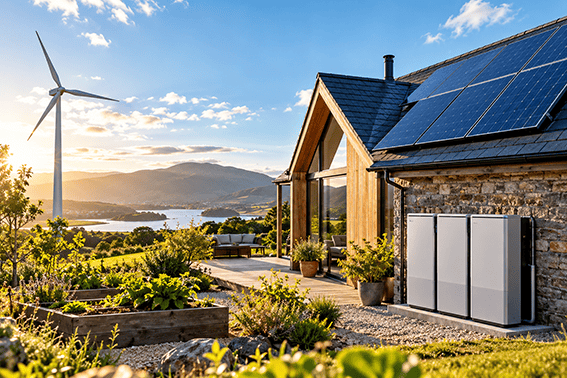
Before investing, look carefully at your property‘s location, available sunlight, exposure and expected energy consumption. What works well for one home may be completely unsuitable for another.
Generating electricity is only half the equation. You’ll also need to consider what happens when renewable generation is low. Battery storage can hold surplus electricity for later use, while some off-grid households also have a suitable backup power source.
Planning both energy generation and storage from the outset can make an off-grid home considerably more practical throughout the year.
2. Water Supply and Management
A dependable water supply is essential when living off-grid, and this needs to be planned just as carefully as electricity.
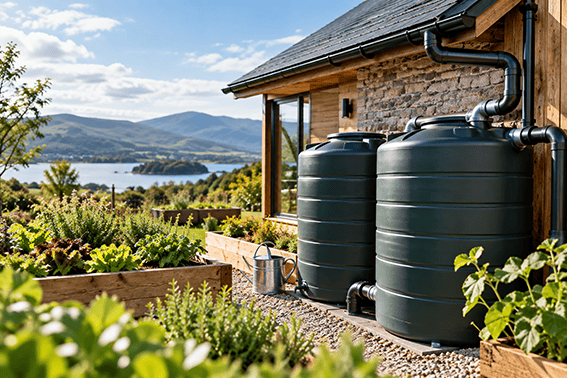
Rainwater harvesting systems can collect water from roofs and store it for later use. Depending on how that water will be used, appropriate filtration and purification may be required. Systems can include sediment filters, activated carbon filtration and UV purification.
Properties in areas with limited rainfall may need another source of water, such as a borehole or well, where appropriate and permitted. These can involve additional installation, testing and maintenance.
Water conservation is important too. Greywater systems can potentially reuse suitable water from showers, sinks and washing machines for purposes such as irrigation, subject to the system being appropriately designed and local requirements.
It’s also important to investigate water rights, drainage requirements and relevant local regulations before installing anything.
A well-designed system should consider not simply where your everyday water comes from, but storage capacity, treatment, seasonal shortages and what you’ll do if your primary supply temporarily fails.
3. Waste Disposal and Management
Living away from conventional utilities also means taking greater responsibility for the waste your household produces.
Composting toilets are one option used in some off-grid homes, significantly reducing the amount of water required for sanitation. However, any system needs to be appropriate for the property and comply with applicable environmental and waste regulations.
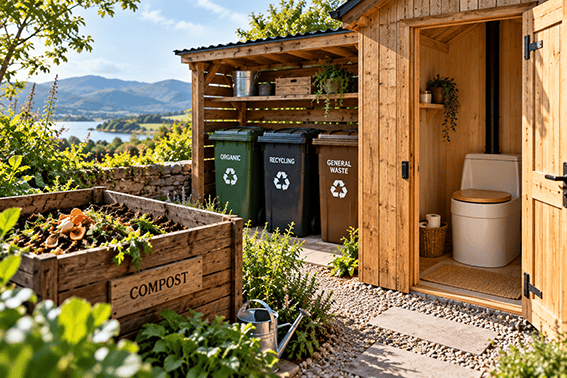
Household waste can also be reduced through composting, recycling and reusing materials wherever practical. Organic kitchen and garden waste can potentially be turned into useful compost, while recyclable materials should be separated and disposed of through suitable facilities.
It’s worth creating a designated area for storing and separating different types of waste so that they remain manageable.
Particular care is needed with batteries, chemicals, electrical equipment and other potentially hazardous materials. These shouldn’t simply be added to ordinary household waste and need to be taken to appropriate disposal or recycling facilities.
Planning waste management before moving off-grid helps prevent what can otherwise become a surprisingly difficult practical problem.
4. Food Production and Storage
Growing your own food can be one of the most rewarding parts of a more self-sufficient lifestyle.
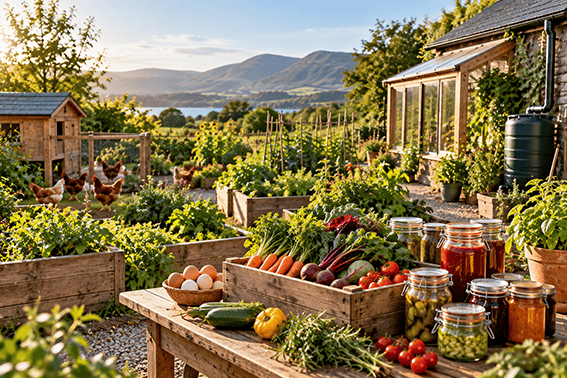
Start with fruit, vegetables and herbs suited to your local climate, soil and available growing space rather than trying to produce everything immediately. Techniques such as companion planting, crop rotation and natural pest management can help create a productive garden while reducing reliance on chemical treatments.
Some households may also choose to keep chickens or other small livestock where the property and local regulations allow it.
Producing food is only part of the challenge, however. You’ll also need somewhere to keep it.
Freezing, drying, fermenting, preserving and canning can all extend the life of seasonal produce when carried
Explore travel, food and wellness features at Ravish Magazine, your go-to UK lifestyle magazine