 Skip to content

The Art of Mixing Old and New for a Timeless, Personal Home
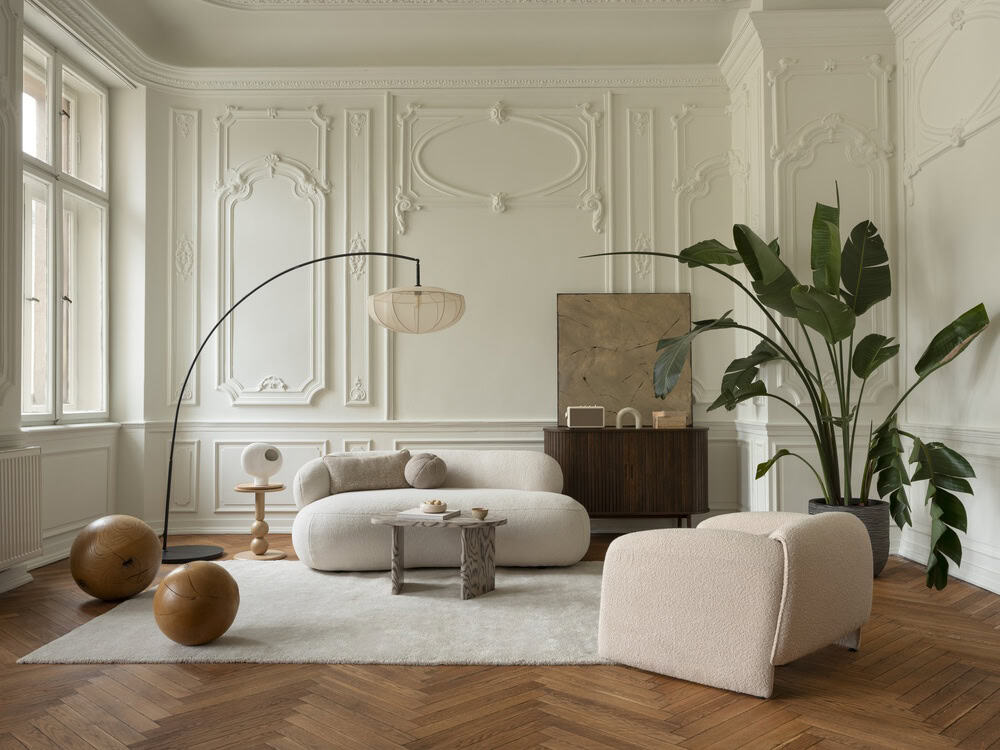
A timeless interior brings together pieces from different periods while keeping the room comfortable, useful and distinctly personal. The most convincing spaces rarely look as though they were bought in one afternoon. They develop through careful choices, combining familiar shapes, varied materials and objects that carry some history.
Mixing old and new design also gives you more freedom. A contemporary sofa can sit beside an inherited table, while a vintage lamp can add character to a recently renovated room. The connection comes from proportion, colour and repetition, not a matching label.
The Appeal of Enduring Style
Enduring interiors feel settled without becoming static. They make room for changing tastes, everyday life and the occasional new find. Instead of following one short-lived decorating trend, they rely on qualities that remain appealing over time: sound construction, balanced proportions and materials that age with grace.
This approach has practical value too. Solid timber, stone, wool, linen and metal often become more interesting as they acquire small marks and changes in tone. The principles of sustainable interior design also encourage people to retain useful items, repair what they already own and choose replacements carefully. A room built around lasting pieces can reduce the cycle of buying, discarding and redecorating.
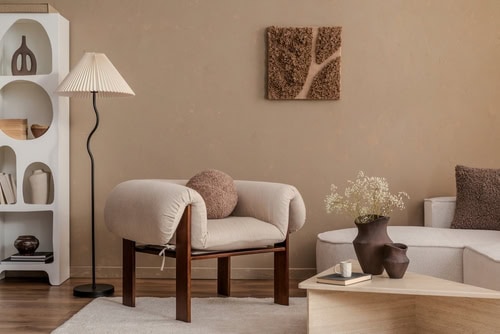
Start with the items that do the most work. In a sitting room, that might be the sofa, storage and main lighting. Choose straightforward forms and durable finishes for these larger elements, then let smaller furnishings provide stronger colour or decorative detail.
Enduring style still leaves space for fun. A sculptural side table, striped cushion or glossy ceramic can lift a quiet scheme without taking control of it. If your taste changes later, these accents are easier to move or replace than a large piece of furniture. The room’s foundation stays useful while its mood develops around you.
Finding Your Design Voice
A personal interior begins with observation. Before buying anything, save around 20 rooms that hold your attention. Look back through them after a week and note repeated details. You may discover that you favour low furniture, warm woods, graphic artwork, or rooms with generous empty space.
Pay attention to how you live as well as what you like. A beautiful glass table may frustrate a busy household that needs a forgiving surface for meals and homework. Deep seating could suit long evenings at home, while compact chairs and movable tables may work better for someone who entertains in a smaller flat.
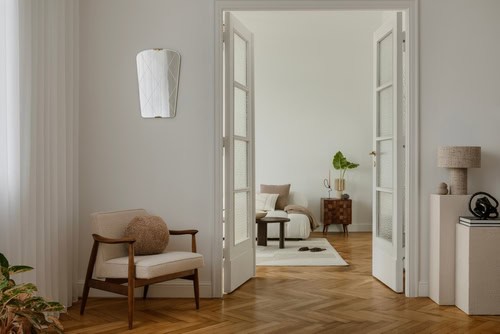
When you’re ready to explore a particular period, a curated collection of mid-century modern furniture can help you compare silhouettes, materials and proportions in one place. Notice which features appeal to you, such as tapered legs, restrained upholstery, or the warmth of natural timber. You don’t need to recreate an entire period room. One well-chosen item can provide enough definition.
It also helps to write three words that describe how you want the space to feel. “Calm, tactile and sociable” gives you a useful filter when considering a purchase. If an item looks impressive but feels cold or awkward, it probably won’t support that brief. Your design voice becomes clearer each time you choose according to real preferences and routines.
Curating Your Collection Thoughtfully
Good curation needs time and restraint. Measure the room first, including doorways, window heights, and the space required to walk around furniture. Keep those figures on your phone so an appealing vintage cabinet doesn’t become an expensive problem when it arrives.
Next, make a simple priority list, separating genuine needs, such as dining chairs or bedside lighting, from decorative wants like those found in mid-century interior design. Set a budget for each category and leave a portion aside for delivery, restoration, or rewiring. Older lighting should be checked by a qualified professional before use, especially when its wiring history is unknown.
Materials deserve close attention. The Furniture Industry Sustainability Programme explains industry efforts around responsible production and resource use, but shoppers can apply the same thinking on a smaller scale. Ask what an item is made from, how it has been constructed, and whether its components can be repaired. Check drawers, joints, hinges, and upholstery instead of judging condition from a front-facing photograph.
Keep records for valuable or distinctive finds. Save receipts, dimensions, maker details, and care instructions in one folder. Photograph labels or stamps before placing heavy furniture against a wall.
Most importantly, allow gaps. An empty corner can wait until you find the right chair or floor lamp. Filling every space quickly tends to create visual noise, while a slower process lets each addition earn its place.
Integrating Vintage Pieces Seamlessly
Give a vintage piece a clear role in the room. A sideboard might provide media storage, an old dining table could become a generous desk, and a small chest may work as a bedside cabinet. Useful furniture feels naturally connected to daily life, even when its design comes from another era.
Create visual links between old and new pieces. Repeating a material is one easy method. For example, the brass detail on an older lamp can echo the handles on a contemporary cabinet. A dark timber table may connect with picture frames elsewhere in the room. These small repetitions establish rhythm without making everything match.
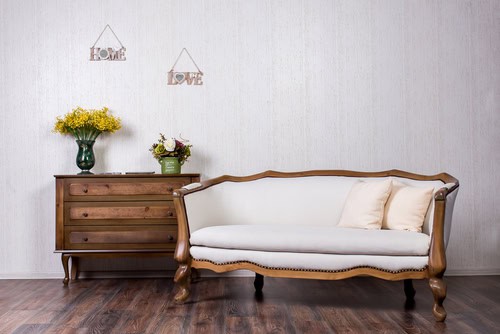
Scale matters just as much as colour. A delicate vintage chair can look lost beside a large modular sofa, so give it company with a slim floor lamp or small table. Likewise, a substantial antique cupboard needs breathing room around it. Mark furniture dimensions on the floor with low-tack tape before committing to a purchase. This quick test reveals how much walking space will remain and whether the piece blocks a door or sightline.
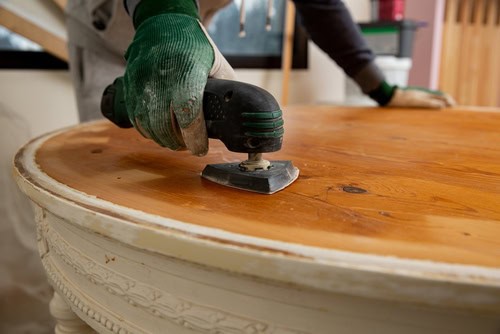
Condition can be part of the appeal, but distinguish surface character from structural damage. Minor scratches, faded timber and softened edges often tell a story. Loose joints, strong odours or active pest damage need closer assessment. Guidance on caring for furniture and woodwork can help you understand gentle cleaning and suitable environmental conditions. When restoration is needed, aim to preserve the item’s character instead of removing every trace of age.
Achieving a Layered Look
Layering comes from combining different heights, textures, and visual weights. Begin with the broad surfaces of the room: walls, flooring, curtains and large furniture. Add medium-sized elements such as lamps, side tables and artwork, then finish with books, ceramics and textiles. Working in that order prevents small accessories from dictating the whole scheme.
Use a limited colour family to hold varied objects together. A palette of cream, olive, rust and dark brown could include a new linen sofa, an older wooden cabinet and several pieces of contemporary pottery. The items don’t need identical shades. Slight variations create depth and stop the room feeling overly coordinated.
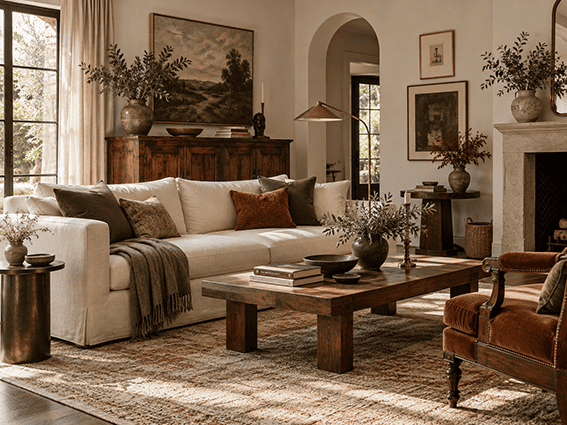
Texture adds another layer without demanding extra colour. Pair smooth metal with wool, polished timber with slubby linen, or glossy ceramics with woven baskets. Soft furnishings also help older and newer furniture share the same setting. One fabric repeated across a cushion and lampshade can create a subtle connection.
Leave some surfaces partly clear. A sideboard displaying three objects with different heights will usually feel more considered than one crowded with a dozen similar pieces. The same principle applies to walls. Art gains presence when there’s enough space around each frame.
Finally, edit the room in daylight and again after dark. Move anything that interrupts a walkway, competes with a focal point, or lacks a useful home. When the vintage chair, modern lamp, and much-loved ceramic all have room to be noticed, the interior will feel collected over time and ready to keep evolving.