 Skip to content


Be Selfish: Why a Curated Life Is the Key to Happiness
There is a not-so-subtle war being waged on your attention, your calendar, and your sense of self — and most of us are losing it without even noticing.
Every notification, every obligation, every “sure, I can help with that” chips away at the life you actually want to be living. We’ve been taught that generosity means saying yes, that ambition means staying busy, and that rest is something you earn rather than something you deserve.
But what if the most radical, productive, and genuinely kind thing you could do — for yourself and for everyone around you — was to become a little more selfish?
Not recklessly selfish. Not cold or dismissive. Thoughtfully, deliberately, unapologetically selfish about what gets your time, your energy, and your presence.
The Myth of the Generous Yes
Culture has long romanticised the person who does it all.
The one who stays late, takes the extra project, never turns down a friend in need, and somehow still shows up with a smile. We’ve mistaken availability for virtue and busyness for worth. The result? A workforce where 66% of workers report feeling overwhelmed in 2025, and burnout rates among adults under 35 have crossed 80% in some studies.

The “yes” reflex isn’t generosity — it’s often anxiety wearing generosity’s clothes. We say yes because we fear disappointing people, because we’ve tied our value to our usefulness, because refusing feels like a social risk we’re not willing to take. But every uncritical yes is a hidden no to something else: your focus, your rest, your own ambitions, the relationships that actually matter.
The generous yes, given reflexively and endlessly, eventually becomes hollow. You’re physically present but mentally spent. You’re technically helping, but resentfully so. That’s not generosity — that’s depletion dressed up as duty.
Selfishness Has a Branding Problem
The word “selfish” carries centuries of moral baggage. It conjures images of the person who takes the last slice, who cancels plans without apology, who treats others as props in their own story. That version of selfishness is real and worth rejecting.
But there’s another version — one that philosophy, psychology, and plain lived experience all quietly endorse — and it looks nothing like that. Aristotle argued that you cannot give what you do not have. The Stoics built entire frameworks around knowing what falls within your control and ruthlessly protecting your attention toward it. Even the most utilitarian thinkers acknowledged that a depleted person produces less good in the world than a replenished one.
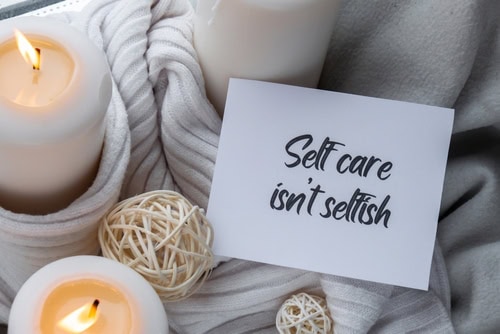
Modern psychology has caught up. Research consistently shows that people who set clear personal boundaries report lower anxiety, higher relationship satisfaction, and greater long-term productivity. The act of protecting your time and energy isn’t a withdrawal from the world — it’s an investment in your capacity to engage with it meaningfully.
The problem isn’t selfishness. The problem is that we’ve never been given permission to practise it well.
What a Curated Life Actually Looks Like
Curation, in the artistic sense, means choosing what belongs and what doesn’t — not out of laziness, but out of a commitment to coherence and quality.
A well-curated gallery doesn’t have empty walls because the curator ran out of ideas. The walls are selective because the curator understands that everything you include shapes the experience of everything else.
Your life works the same way.
A curated life isn’t a minimalist life, necessarily. Some people’s curated lives are full, loud and social. Others are quieter, more interior. The point isn’t the volume — it’s the intentionality. Every commitment, relationship, and recurring obligation should be there because you chose it, not because it accumulated while you weren’t paying attention.
This applies to your social circle. Research in social psychology suggests that most people have a finite reservoir of deep relational energy. The people who thrive long-term tend to invest that energy in fewer, higher-quality connections rather than spreading themselves thin across a wide network of surface-level ties. Curating your relationships isn’t cruelty — it’s clarity.

It applies to your calendar, too. The meeting that could have been an email, the standing obligation you’ve outgrown, the social event you attend out of guilt rather than genuine desire — these are the noise that drowns out the signal of your actual priorities.
And it applies to your experiences. The most memorable, formative moments of most people’s lives share a common thread: they were chosen deliberately. A spontaneous weekend that you actually wanted.
A trip designed around your specific sense of wonder. Even something as considered as seeking out bespoke Italian companions speaks to this instinct — the desire for experiences that are tailored, intentional, and genuinely suited to who you are rather than generic and forgettable.
The Attention Economy Wants the Opposite
If you’ve ever wondered why it feels nearly impossible to curate your life, look no further than the world we live in. The attention economy—meaning all the apps, platforms, and media clamoring for your gaze—isn’t just distracting; it’s engineered to keep you from being selective on purpose.
Every algorithmic feed is engineered to feel urgent and endless. Every notification is a small interruption designed to pull you back into someone else’s priority queue. The business model depends on your inability to say no, your susceptibility to distraction, and your willingness to trade your attention for the low-grade dopamine hit of a scroll.
In this context, curation is resistance. Choosing what you engage with, what you ignore, and what you refuse entirely is one of the most countercultural acts available to an ordinary person in 2025. Gen Z, for all the criticism levelled at them, seems to understand this intuitively — they’re driving what researchers are calling an “anti-hustle rebellion,” actively rejecting the overcommitment culture that burned out the generations before them.
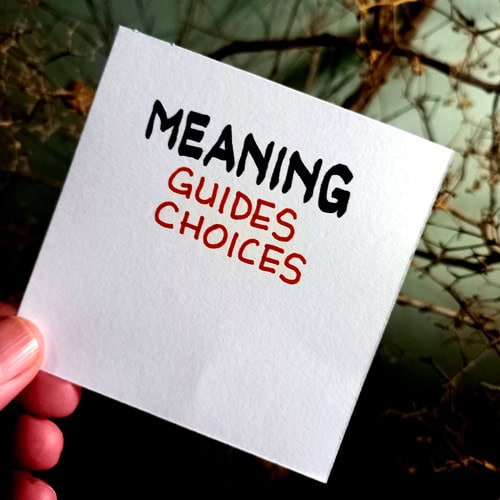
So, living a curated life doesn’t mean you’re giving up on ambition. It just means you’re aiming it differently: you want richer, deeper experiences instead of chasing more.
You’re choosing meaning over numbers, and seeking moments that fill you up instead of ones that drain you.
How to Start Being Selfish (Without Becoming a Monster)
The practical shift begins with a single, uncomfortable habit: the deliberate pause before the automatic yes.
When a request lands — whether it’s a work commitment, a social obligation, or a favour from a friend — resist the reflex. Give yourself the space to ask whether this actually aligns with where you want your energy to go. You don’t owe anyone an immediate answer, and the slight discomfort of “let me think about that” is infinitely preferable to the slow resentment of a yes you didn’t mean.
From there, the work is largely about auditing what’s already in your life. Most people who feel overwhelmed aren’t being ambushed by new demands — they’re buried under old ones they never formally ended. The project ran past its purpose. The friendship that became a one-way street. The habit that made sense two years ago, and now just takes up Tuesday evenings.
Ending things gracefully is a skill, and it’s one that almost no one teaches. But it’s central to the curated life. You’re not burning bridges — you’re making space. And the things and people worth keeping will understand that.
It also helps to get specific about what you’re actually optimising for. Vague notions of “balance” or “wellness” are too abstract to act on. But if you can name the three or four things that genuinely make your life feel worth living — and build your decisions around protecting those — the rest becomes considerably easier to filter.
The Ripple Effect of Selective Generosity
Here’s the counterintuitive truth that the “selfishness is bad” narrative consistently ignores: people who curate their lives tend to be more generous, not less.
When you stop saying yes to everything, the yeses you do give carry real weight. Your presence becomes a gift rather than a given. Your attention, when offered, is actually there — not split across seventeen other obligations and a mental to-do list. The people in your curated inner circle receive a version of you that is rested, engaged, and genuinely glad to be there.

There’s also something clarifying about knowing what you won’t do. Boundaries don’t just protect you — they communicate to others who you are and what you value. They make relationships more honest. They replace performance-based availability with the reality of genuine connection.
The philosopher Simone Weil wrote that attention is the rarest and purest form of generosity. If that’s true — and most of us, in our bones, know that it is — then protecting your attention isn’t selfishness at all. It’s the prerequisite for the only kind of giving that actually means something.
A Life Worth Choosing
The curated life asks something difficult of you: that you take yourself seriously enough to make real choices.
That you stop treating your time as a commons that anyone can graze on. That you accept the temporary discomfort of disappointing some people in exchange for the lasting satisfaction of a life that actually reflects your values.
This isn’t about becoming harder or more closed. The goal is a life that is more genuinely yours — more coherent, more intentional, more alive to what matters. That kind of life tends to be warmer and more connected than the frantic, overcommitted alternative, precisely because the connections within it were chosen rather than accumulated.
Be selfish about your attention. Be selfish about your time. Be selfish about the experiences you let shape you and the people you let into your life.
The world will not run out of demands on your energy. But you might run out of energy — and that’s the loss worth preventing.
Crave Magazine: your essential guide to the best in UK lifestyle, food and travel.