 Skip to content

How to Add Texture to Your Home: 5 Simple Styling Ideas
Texture gives a room warmth, depth and character without demanding a full redesign. A few carefully chosen materials can make even a simple neutral scheme feel more inviting. The secret is to vary surfaces across the room, combining soft fibres with natural grain and flatter finishes. These five ideas are easy to adapt to your space, budget and existing colour palette.
Start from the Ground Up
Flooring covers a large visual area, so it’s the natural place to establish a softer, more tactile feel. A deep pile adds comfort to bedrooms and lounges, while a shorter textured weave is practical for busy halls or family spaces. Homeowners near Wigan can explore luxurious carpets alongside laminate, vinyl and herringbone options, with advice tailored to the room.

Take samples home before deciding. View them beside your walls and furniture during the day and under artificial light at night. If replacing the whole floor feels too ambitious, place a chunky wool rug beneath a coffee table or partly under the front legs of a sofa.
Drape Tactile Throws and Linens
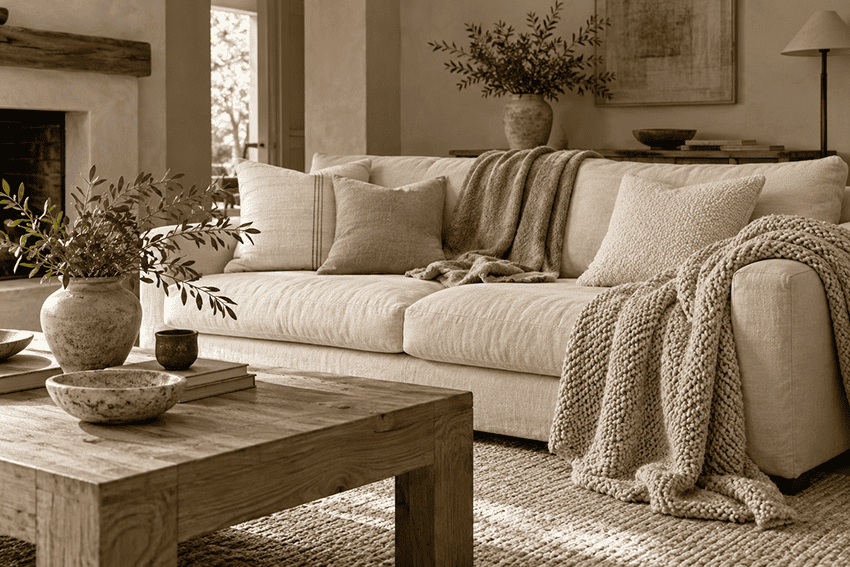
Throws offer an easy, low-commitment way to introduce texture. Choose one with a visible weave, boucle finish or soft brushed surface, then drape it loosely over a sofa arm or fold it across the foot of a bed. These throw styling ideas show how relaxed folds can make layers look natural.
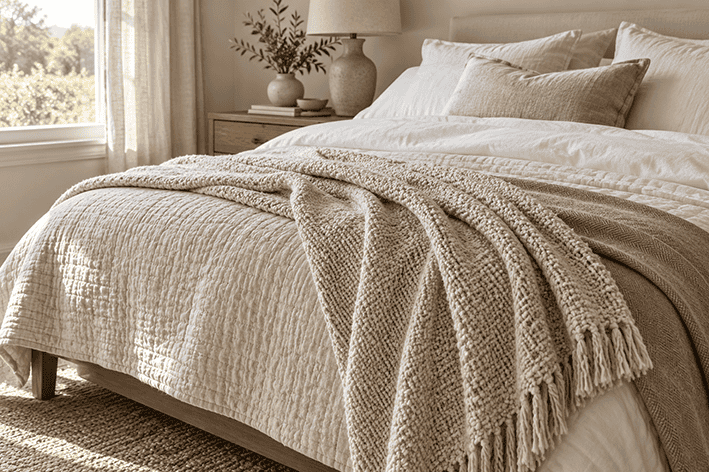
Keep the surrounding linens varied but connected. Crisp cotton sheets work beautifully with a quilted bedspread, while a linen cushion introduces a slightly rumpled finish. For a polished arrangement, follow a few blanket layering tips and repeat one colour across two different fabrics. Limiting the scheme to two or three tones prevents the layers from looking cluttered.
Introduce Rough-Hewn Timber Accents
Timber brings visible grain and small natural variations into rooms that might otherwise feel too smooth. You don’t need to replace major furniture to get the effect. Try a reclaimed wooden stool beside an armchair, a ridged tray on a dining table or a simple oak shelf against a painted wall.

Balance is key when using rougher pieces. One or two accents will stand out more clearly among cleaner surfaces, particularly in compact rooms. Check unfinished timber for splinters and use felt pads beneath heavy accessories to protect tables and flooring. If the room already contains several wood tones, repeat the dominant shade in a picture frame or lamp base so the mix looks deliberate.
Experiment with Matte Wall Finishes
Flat and chalky wall finishes absorb more light than glossy paint, creating a quiet backdrop that helps woven fabrics and timber grain stand out. Matte emulsion suits most living areas and bedrooms, although washable formulations are a sensible choice in hallways or homes with children and pets.
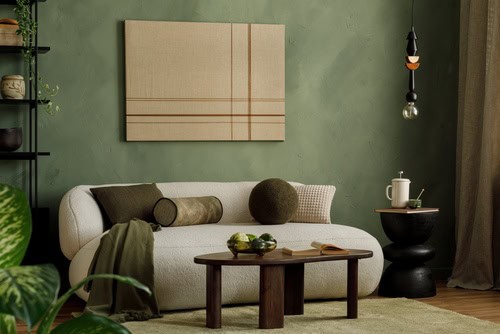
For a smaller update, paint one alcove or the wall behind a headboard. Limewash-style finishes create subtle movement through visible brush marks, but test your technique on a board first because overlapping strokes affect the final appearance. You can also add texture without repainting by hanging a woven wall piece, ribbed ceramic plates or framed handmade paper. Keep decorative groups compact so they read as a single feature.
Mix Woven Fabrics Across Seating
A matching furniture set can feel flat when every piece has the same finish. Create more depth by combining upholstery with distinct weaves, such as a smooth cotton sofa, a boucle accent chair and cushions in slubby linen. Keep a shared colour running through the arrangement to make those differences feel cohesive.

Texture also affects practicality. Tightly woven covers cope better with frequent use, while looped fabrics may snag in homes with pets. Use the more delicate material on a removable cushion or occasional chair where it receives less wear. Before buying several covers, test one against the upholstery in daylight. A warm cream may look yellow beside a cool grey sofa, even when both shades seemed neutral in the shop.
Once the main pieces are in place, stop before every surface gains another layer. A room feels richest when smooth areas give the carpet pile, timber grain and woven cloth enough space to be noticed