 Skip to content

How the Care Sector Is Becoming More Sustainable
With an ever-increasing ageing population in the UK and a looming climate crisis, there is a drive for more sustainable solutions across sectors worldwide. The health and social care sector are leading the way by connecting care home residents, service users, and their families with providers who support and encourage more environmentally friendly practices. With a duty to look after our loved ones, care home groups and health and social care services are changing how they work and the facilities they provide, putting sustainability at the heart of everything they do.
Sustainable care homes
Health and social care providers will take various approaches to sustainability, but at their core they each offer person-centred care while trying to minimise their environmental impact. Many are opting to reduce their carbon footprint by using renewable energy sources where possible and encouraging staff and visitors to use greener modes of transport.
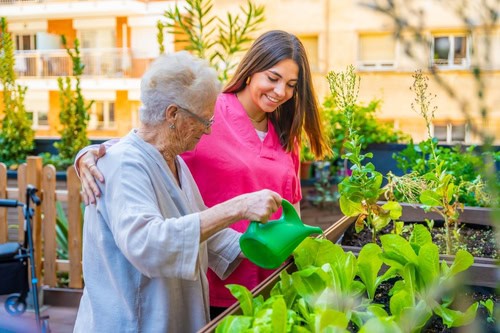
One care home group in the UK, Oakland Care, have homes across the South of England and are going the extra mile by expanding their offering with purpose-built environmentally friendly care homes. Oakland Care have recently opened a new care home in Bracknell, Berkshire Manor, which is fully carbon neutral and incorporates industry-leading green features to help support sustainable living.
The care home group were the first in the UK to be certified carbon neutral, and Oakland Care has continued investing in innovative projects to reduce carbon emissions ever since. The team encourage biodiversity and consistently promotes sustainability throughout their care homes, with wildlife gardens bursting with nature for residents to enjoy and electric vehicle charging points in the car parks for visitors and staff.
Care sector sustainability regulations
Putting sustainability into practice can look different for each care setting, with most companies outlining their environmental efforts within their policies and regulations. The Care Quality Commission, an independent regulator for health and social care in England, integrates environmental sustainability into its Well-led assessment framework for NHS trusts. Their assessments encourage care providers and organisations to take action and ensure their settings use renewable energy sources and low-carbon alternatives wherever possible.

Care home groups and social care settings are expected to support healthcare workers, helping them understand why low-carbon options and resource-efficient care are securing the future of the sector. Team leaders should show staff examples of sustainable care practices and how to reduce the environmental impact of healthcare activity.
Why sustainability in the care sector matters

Providing high-quality, low-carbon care has health benefits for staff, residents, and the general population. According to the World Health Organisation, air pollution is a leading cause of heart disease, strokes, and lung cancer, and it has been linked to Alzheimer’s and dementia. These health conditions put massive amounts of pressure on the care sector, with hospitals, at-home carers, and residential care homes supporting an increasing number of residents and service users suffering from these conditions. If care providers and more organisations within the sector move to using energy-efficient, sustainable solutions, there is a chance that there will be a reduction in air pollution and, in turn, a reduction in the number of people suffering from pollution-related illnesses.
Sustainable care solutions
There are a variety of steps that a care home or healthcare facility can take to become more environmentally friendly and introduce sustainable practices into the workplace.
Building upgrades
Many healthcare facilities and care homes are based in large, old buildings, and while they’re ideal for housing lots of residents, older buildings are notorious for not being very energy efficient. To help reduce the carbon footprint of a facility like this, there are building upgrades that can be done to lower energy consumption and costs. Solar panels are a simple, sustainable solution that can be added to the roof of care facilities to help minimise their carbon footprint and provide an alternative source of energy.
Lighting
Similar to the building upgrades that can be done to cut costs, an easy way to become more energy efficient in the workplace is to switch out light bulbs for LED lighting. Using LED lights instead of traditional incandescent bulbs uses far less electricity to produce the same level of brightness, and they can last for over 20 years. This simple switch can help large care facilities save money on their energy bills, while also reducing their carbon footprint.
Water conservation

For facilities with gardens and open spaces, using outdoor water tanks to collect rainwater is an easy water conservation method. Using the collected rainwater for outdoor sprinkler systems and watering plants is a simple sustainable solution that can be implemented quickly and easily. While regular handwashing and personal hygiene are paramount in care settings, water consumption should be closely monitored to see if there are other ways to reduce it.
Electronic records
There are often anywhere from 50 to 100 residents in a healthcare or care home setting at any time, depending on the size of the facility. Each resident will have their own file, with extensive information such as their medical history, dietary requirements, and medication records. Hospitals and care homes are also often required to take notes about patients and residents daily, recording their meals, medications and behaviours. To reduce the amount of paper used for these documents, most healthcare professionals and care home facilities are eliminating paper charts and files, turning to electronic methods instead. Not only do electronic records make sharing patient information across different departments and facilities much easier, but they also help patients and residents’ families stay informed about their care. Care homes use apps and electronic records to keep families in the loop, posting daily updates on an online platform which shares them with loved ones who want to keep in touch but may not be able to visit often.
Waste management

Recycling is one of the easiest ways to become more sustainable, and with the care sector producing high levels of medical waste, it’s important that they focus on ways to reduce what goes to landfill and implement efficient waste management solutions. One of the key products used daily within a care setting that often goes to landfill rather than in the recycling is medication blister packs. The small plastic sheets and bottles which house tablets and medical supplies are often mixed with other materials like metal and cardboard, so they can’t just be thrown in a single recycling bin. There are recycling companies that work with the medical, health and social care sectors to collect these specific types of waste and save them from going to landfill, offering a more sustainable solution to waste management.