 Skip to content


Why You Always Want a Snack the Minute You Sit Down at Night
You’ve eaten dinner. You’re full. You haven’t given food another thought.
Then the television goes on, you sink into the sofa and suddenly your brain has a very specific suggestion: snack.
Preferably something involving chocolate.
It’s incredibly easy to interpret evening cravings as hunger – or, worse, as evidence that you’ve somehow failed at being disciplined for the day. But the reason you routinely fancy something after dinner may have surprisingly little to do with an empty stomach.
Sometimes, your sofa has simply trained your brain to expect food.
Why Do We Crave Snacks After Dinner?
Think about what usually happens at the end of your day.
Dinner finishes. The kitchen is cleared. Work is finally over. You change into something comfortable, sit in your favourite spot and put on whatever you’re currently watching.
Then you have a snack.
Repeat that often enough and those individual events can start becoming connected.
This is sometimes described as a habit loop: a cue prompts a familiar behaviour that delivers some form of reward.

In this case, the cue might be sitting on the sofa or switching on the television. The behaviour is getting something to eat. And the reward isn’t necessarily satisfying hunger – it could be relaxation, pleasure or simply the comforting feeling that the working day is officially over.
Eventually, you may start thinking about food as soon as the cue appears.
That explains why you can genuinely feel satisfied after dinner and nevertheless find yourself contemplating the biscuit cupboard 20 minutes later.
Your Sofa Isn’t the Only Potential Trigger
Anything that regularly accompanies evening snacking can potentially become part of the ritual.
Your favourite programme. Scrolling through your phone. Making a cup of tea. Sitting in a particular chair. Even walking into the kitchen at roughly the same time every night.
None of this means there’s anything inherently wrong with eating while watching television.
The interesting part is noticing whether you’re actively deciding that you’d like something or finding yourself halfway through a snack before you’ve really thought about it.
And there’s an important difference between the two.
Why Cravings Can Feel Stronger at Night
There’s another reason that 8pm you might make different choices from 10am you: you’re tired.
By evening, most of us have spent an entire day making decisions, completing tasks, dealing with other people and generally being responsible adults.
That can make familiar routines particularly appealing.
Diane Glancy, a CBT therapist, explains that evening eating can sometimes be connected with stress, tiredness, boredom or simply wanting a little comfort and pleasure at the end of the day.
Rather than immediately deciding that a craving needs to be resisted, she recommends getting curious about it.
Are you hungry?
Or are you exhausted? Thirsty? Bored? Stressed? Looking for something enjoyable after a tedious day?
That distinction can completely change what you decide to do next.
How Can You Tell If You’re Actually Hungry?
Unfortunately, your body doesn’t provide a helpful notification saying PHYSICAL HUNGER: 87%.
But there can be clues.
Physical hunger may build gradually and come with sensations such as a rumbling or empty-feeling stomach, reduced energy or an openness to eating several different foods.
A habitual or emotional craving can sometimes arrive much more suddenly and focus on something very particular.
You don’t want food.
You want that food.
Perhaps it’s chocolate while you’re watching television, crisps with a film or biscuits with your evening tea.
But these aren’t foolproof tests. Hunger is individual, and emotional and physical reasons for eating can overlap.
You can also be genuinely hungry and fancy chocolate. The two aren’t mutually exclusive.
Sometimes You Really Do Need an Evening Snack
It’s worth saying this because diet culture has managed to make eating after an arbitrary time of day feel strangely rebellious.
Being hungry after dinner doesn’t automatically mean you’ve developed a bad habit.

Perhaps dinner was small. Maybe you ate earlier than usual. You could have skipped lunch, exercised more or simply not eaten enough during the day.
In that case, your body asking for more food isn’t a psychological puzzle requiring investigation.
You might just need a snack.
Trying to ignore genuine hunger because you’ve decided eating after 8pm is somehow forbidden can turn something completely ordinary into a battle.
Try the 30-Second Pause
If evening snacking has become so automatic that you’d like to understand it better, you don’t need an elaborate strategy.
Before heading to the kitchen, pause briefly and ask:
What do I actually need right now?
Not, “Am I allowed to eat?”
And definitely not, “Have I been good enough today to deserve this?”
Instead, consider what’s happening.
If you’re hungry, food makes sense.
If you’re thirsty, get a drink.
If you’re shattered, perhaps what you really need is an earlier night.
If you’re stressed after a horrible day, acknowledge that rather than pretending the chocolate craving appeared from nowhere.
And if you’re bored senseless by whatever you’re watching, perhaps Netflix is the problem rather than the fridge.
Don’t Replace Snacking With Punishment
There’s a trap here.
Once people identify “emotional eating”, the next instinct can be to create a list of approved distractions.
Go for a walk. Clean something. Drink water. Do 50 squats. Fold the washing.
Anything, apparently, except eat the biscuit you wanted.

But the point of recognising an emotional need isn’t to outsmart yourself until the desire for food disappears.
If you’re stressed, perhaps you need reassurance, a conversation or genuine downtime. If you’re lonely, sending someone a message might be more useful. If you’re exhausted, rest might address the actual problem.
And sometimes you might identify the craving perfectly clearly and still decide you want the biscuit.
That’s allowed too.
What If You Want Chocolate Every Night?
Have some chocolate.
Seriously.
Turning particular foods into forbidden rewards can give them far more significance than they deserve.
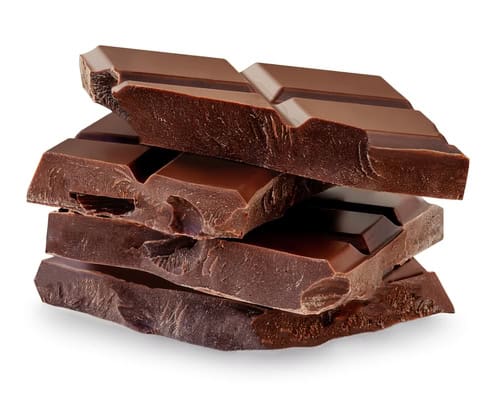
If you genuinely enjoy something sweet after dinner, there’s no requirement to eradicate that pleasure from your life in pursuit of nutritional perfection.
You can also make a snack more substantial if that’s what you need. Chocolate with a handful of nuts, for example, adds protein, fibre and fats while still allowing you to eat the thing you actually fancied.
The objective isn’t to transform chocolate into celery.
It’s to make eating a conscious choice rather than something that happens automatically every time the television comes on.
Your Evening Snack Isn’t a Test of Willpower
Perhaps the most useful thing to ditch is the idea that nighttime eating reveals something about your character.
It doesn’t.
Brains are exceptionally good at learning patterns. If you’ve spent five years eating something delicious while watching television at 9pm, it isn’t particularly surprising that your brain starts anticipating something delicious at 9pm.

You don’t necessarily need to break that association.
But understanding it gives you a choice.
Some nights you’ll realise you’re hungry and make yourself something to eat. Other nights you’ll recognise that you’re stressed, tired or bored and decide something else would make you feel better.
And occasionally you’ll know perfectly well that you’re not hungry but still fancy a packet of crisps.
The difference is that you’re choosing the snack – rather than the sofa choosing it for you.
Original story idea and expert commentary supplied by Simple Online Pharmacy.
Explore more with Opulence, your luxury magazine in the UK for design, travel and sophisticated living.