 Skip to content

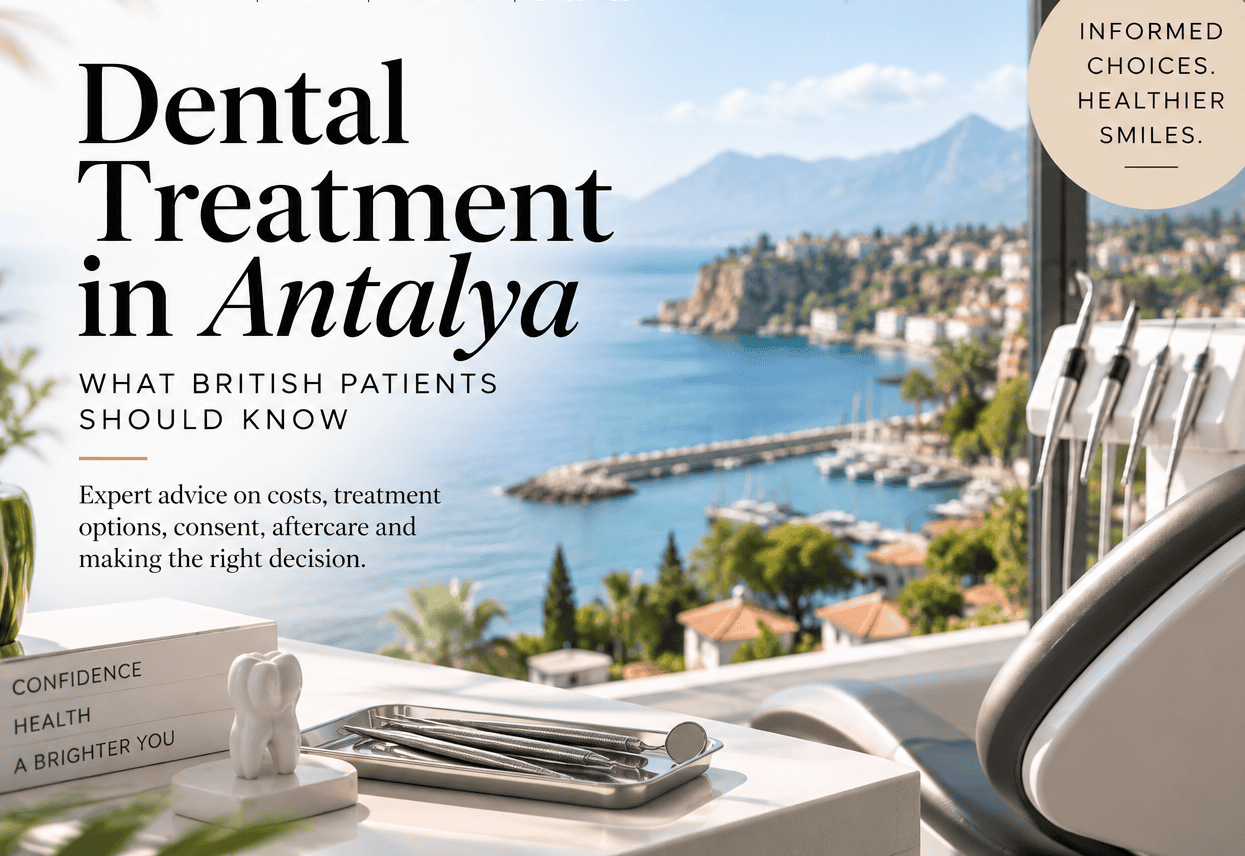
Considering Dental Treatment in Antalya? What British Patients Need to Know
Ballıpınar Dental Clinic Explains What British Patients Should Know Before Dental Treatment in Antalya
Rıdvan Ballıpınar discusses why people consider travelling to Antalya for private dental care, how a responsible patient journey should work and why price should never replace diagnosis, consent and aftercare.
People considering dental treatment abroad may look at Antalya because private care can cost less than in the UK and clinics serving international patients may coordinate appointments and travel information. But Rıdvan Ballıpınar, a dentist licensed in Türkiye and CEO of Ballıpınar Dental Clinic, says the destination should remain secondary to the clinical decision.

“Value is not the cheapest route to an attractive smile,” Ballıpınar says. “It is the right diagnosis, proportionate treatment and a result planned to function and endure. A patient should understand the alternatives, risks, likely lifespan and full cost before consenting.”
Lower operating and laboratory costs, together with exchange-rate differences, can make private dental treatment in Türkiye less expensive than comparable private care in the UK. These factors do not demonstrate quality or suitability. Ballıpınar advises patients to examine the clinician’s credentials, the reason for each procedure, material traceability and the arrangements if something goes wrong.
“Savings should never come from shortening diagnostic time, weakening sterilisation, using materials that cannot be traced, omitting clinically necessary imaging or rushing consent,” he says. “A responsible clinic should explain what is included, what is excluded and who is accountable at each stage.”
The patient journey should begin before any booking is treated as final. A remote discussion may help the clinic understand the patient’s concerns, review their medical history and consider photographs or existing X-rays. It may also provide possible options, indicative timings and a provisional cost range. It cannot establish suitability or replace a face-to-face clinical assessment.

“A definitive plan based only on photographs should be treated with caution,” Ballıpınar says. “The teeth, gums, bite and supporting structures need to be assessed in person. Further imaging may also be clinically required. The eventual plan and price can change if the examination reveals something that was not visible remotely.”
On arrival in Antalya, the patient should receive an in-person examination before treatment begins. The clinician should explain the proposed treatment, reasonable alternatives, material risks, anticipated limitations and likely maintenance needs. The patient should also be given time to ask questions and decide without pressure. Treatment is not suitable for everyone, and no result should be guaranteed.
“Consent is a clinical process, not simply a signature,” Ballıpınar says. “Flights, deposits or a limited stay should never be used to push somebody into continuing. If the findings differ from the provisional assessment, the patient must be free to reconsider.”
Treatment depends on individual need. Patients may be assessed for crowns, veneers, implants or restorative work, or advised to consider orthodontic or more conservative options. Timing should allow for clinical stages, laboratory work and reviews rather than fitting everybody into an identical package.
This is relevant to concerns associated with the phrase “Turkey teeth”, often used in the UK to describe extensive tooth preparation and uniform-looking restorations. Ballıpınar says price competition can encourage speed and standardised packages, but the term should not be used to judge every treatment provided in Türkiye.
“Healthy tooth structure should be preserved wherever clinically possible,” he says. “Veneers, crowns and orthodontic alternatives should be discussed according to need. Shape, shade and proportion should be planned for the individual rather than sold as the same smile for everybody.”
Before choosing a provider, Ballıpınar recommends checking five points: who will diagnose and carry out the treatment; why each procedure is proposed and what alternatives exist; which materials, implant systems and laboratories will be used; the total price and exclusions; and the written process for aftercare, complaints and remedial treatment. Warning signs may include time-limited pressure, promised or guaranteed outcomes, identical plans for different patients, or unclear responsibility for additional treatment and travel costs.

A quotation should itemise examinations, imaging, procedures, temporary restorations, laboratory work, materials, medicines and planned reviews. It should also explain warranty conditions and exclusions, while making clear that a warranty is not a guarantee of a clinical outcome. Patients should ask who would meet the costs of complications, emergency care, remedial work or another journey to Türkiye.
Aftercare should be considered before travel. Ballıpınar works with an independent partner clinic in London that may coordinate pre-arranged private follow-up and check-ups within its confirmed scope. The London provider is separate from Ballıpınar Dental Clinic, and the availability, nature and cost of any appointment should be confirmed in writing. This arrangement is not an NHS service and does not remove the possible need for emergency care in the UK or a return visit to Türkiye.
“A local point of contact may make communication easier, but it cannot remove every medical or financial uncertainty,” Ballıpınar says. “Patients need a written aftercare pathway and should understand what will happen if further treatment is required.”
Ballıpınar Dental Clinic’s commercial sponsorship of Gillingham Football Club has increased its visibility among British audiences, but Ballıpınar says sponsorship must not be interpreted as a clinical endorsement or evidence that treatment is suitable for any individual.
“A partnership can introduce our name to a community, but it cannot replace independent research, a proper assessment or informed consent,” he says. “The decision should be based on clinical need, transparent information and a realistic plan for long-term care – not simply on a lower headline price.”
Important information
Treatment is subject to an individual clinical assessment and may not be suitable for every patient. All dental procedures involve risks, and outcomes and treatment longevity vary. Patients considering planned treatment abroad should seek independent advice, verify the treating clinician and facility, confirm insurance and aftercare arrangements, and obtain a written treatment plan and full quotation before proceeding.